The Life Skills Primary School Children Actually Need (That Aren’t Taught in Tests)
As a primary school teacher in Trinidad and Tobago, I’ve taught long enough to know that children generally do not struggle because they “can’t do the work”.
They struggle because they don’t yet have the skills to manage the work, the pressure, the instructions, or even themselves.
In my classroom, and at the Desha Academy, I see children with potential every day. They know the content but get stuck because of skills that we don’t always talk about openly. These skills are not found listed in a textbook. They show up in every lesson, every homework assignment, every test, every group activity.
Here are some of these life skills that primary school children truly need to develop if we want learning to feel less overwhelming and more meaningful.
1. Following Instructions (Properly and Completely)
Many children rush; they hear part of what is said, assume the rest, and jump straight into doing. This shows up when:
They skip steps
Answer the wrong question
Say “Miss, I don’t understand” without actually listening or reading
Following instructions is about attention, patience, and processing.
2. Managing Frustration
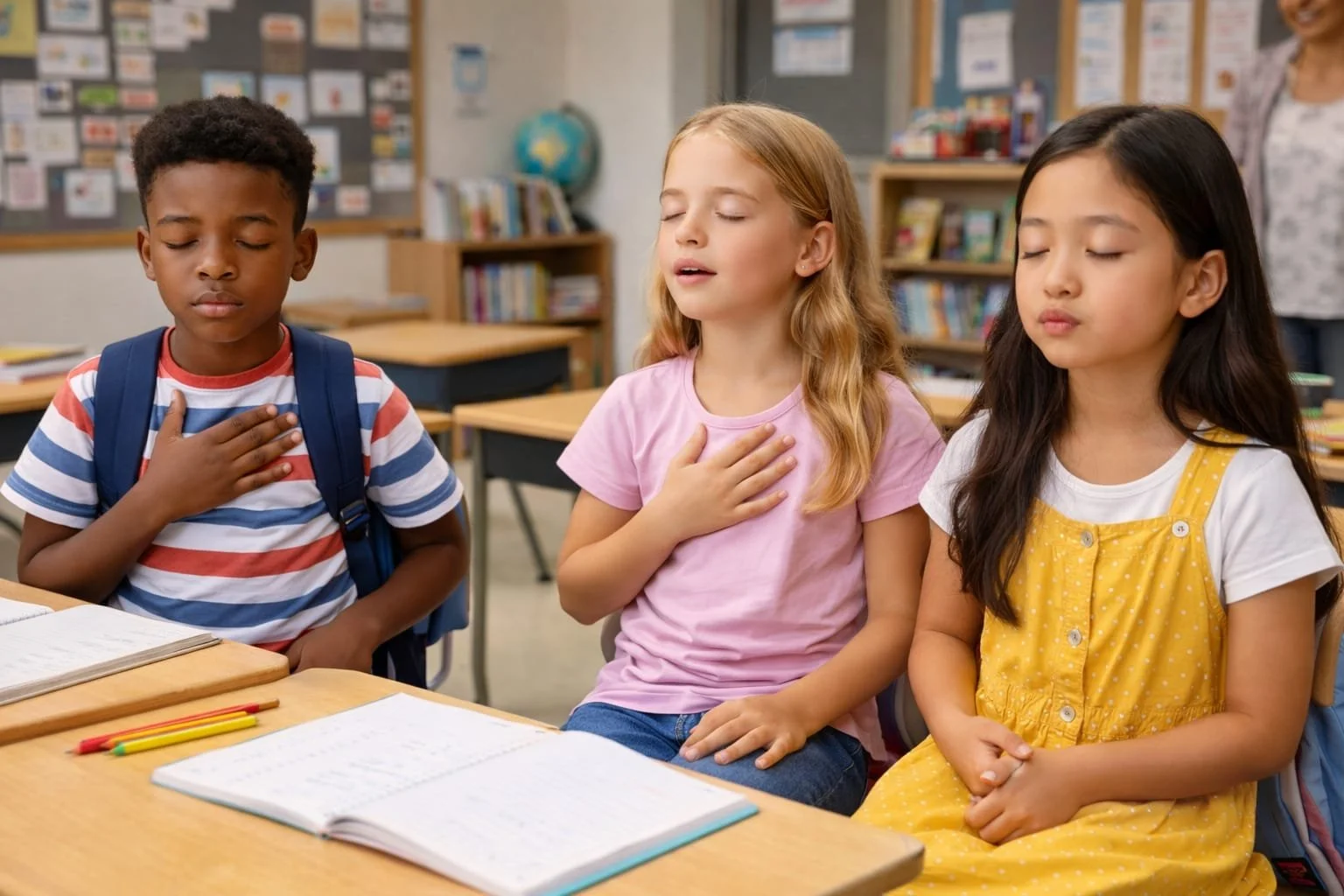
Primary school children practising emotional regulation in the classroom.
This one definitely shows up in Mathematics and Reading.
Some children shut down while some cry; others get angry while some simply refuse to do the work. It is not that they are not intelligent, but they lack the ability to sit with discomfort, try again, and accept that mistakes are part of learning.
This is a skill that must be taught, modelled, and practised.
3. Asking for Help the Right Way
There’s a big difference between:
“Miss, I can’t do it!” and “Miss, I understand this part'; I’m stuck!”
Children need help learning how to ask for help.
4. Taking Responsibility for Their Work
This includes:
Packing their own bag
Remembering homework
Checking their work before submitting
These are small habits, but they build accountability and independence, especially before secondary school.
5. Time Awareness
Many children, and even adults don’t realise how long things take. They leave everything for the last minute because no one has taught them how to:
Break tasks into parts
Work within a timeframe
Pace themselves
Time management starts small, even at primary school level.
6. Listening Without Interrupting
Listening without interrupting is about learning to:
Wait
Listen fully
Respect other voices
This skill affects learning, friendships, and confidence.
7. Thinking Before Responding
Blurting out answers, reacting emotionally, rushing decisions, are as a result of undeveloped self-control.
Children need opportunities to pause, reflect, and respond thoughtfully.
8. Confidence Without Comparison
Many children already believe they are “slow”, “bad at Maths”, or “not smart”.
When building confidence, we must not only praise but must also:
Appreciate small win
Guide
Provide safe spaces to try and fail
Why Should focus on teaching these life skills?
Although academics matter, life skills determine how well children cope with academics.
When these skills are developed early, children:
Learn with less stress
Feel more capable
Become more independent
Are better prepared for the demands of upper primary and beyond
For this reason, at the Desha Academy, we don’t rush learning. We build children, steadily, patiently, and intentionally.
The Right Resources for a Steady Start
Being intentional about learning means choosing the right physical tools. Our bookshop is curated specifically to support the independent, low-stress habits we build at the Academy.
From tactile workbooks that encourage deep focus to reading materials that spark curiosity, you can find our recommended resources at our sister site.