How Trinidadian Society Compares with Japan and Singapore: A Cultural Reflection
Every society is characterized by its own values, rhythms, and ways of organizing life. Through observations and reflections, I have noticed unique contrasts between Trinidad and Tobago and two Asian countries: Japan and Singapore. These differences are being highlighted to demonstrate how history, culture, and social expectations shape people’s daily lives.
1. Collective Harmony vs. Individual Expression
In Japan and Singapore, there’s an emphasis on social harmony and the good of the group.
In Japan, harmony shapes social interaction. People often prioritize group consensus, consideration for others, and avoiding conflict in public spaces.
Singapore also emphasizes order, rules, and collective responsibility, reflected in laws and society’s expectations about behaviour in public.
In Trinidad and Tobago, our vibrant culture is dominated by individual expression and passion.
People are warm, expressive, and sociable, from our Carnival to our everyday conversations.
While community matters, there is less emphasis on conformity and more space for spontaneity.
2. Rules, Infrastructure, and Public Behaviour
Both Japan & Singapore societies are known for orderly public spaces.
In Japan, you’ll notice quiet trains, separated trash sorting systems, punctual public transit, and widespread respect for rules.
Singapore’s city is ultra-clean, public regulations are enforced strictly, and there’s a strong emphasis on civic responsibility.
These norms are supported both by the expectations of society and the law.
In Trinidad, ours is lively, colourful but the public systems and enforcement are rather flexible.
Our public spaces are more dynamic, and interactions are informal.
Rules and laws exist, but enforcement isn’t always strict which sometimes reflects our cultural tolerance for informality which may seen as chaotic to outsiders.
3. Education and Respect for Structure
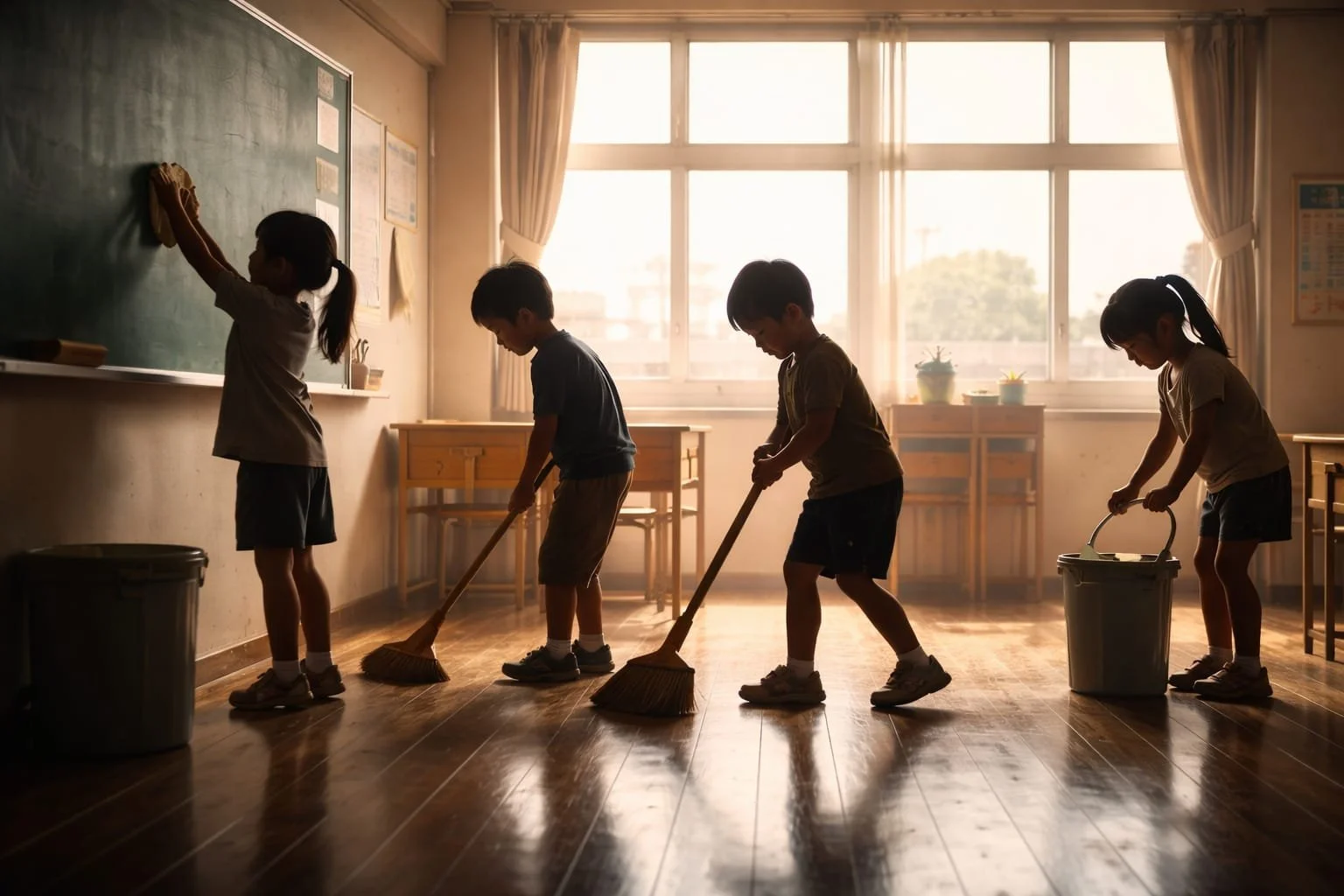
Children in an Asian school assisting in maintaining a clean classroom
The Education Systems in Japan and Singapore are very structured and performance-oriented.
Japan encourages discipline, group accountability in schools, and respect for elders and teachers.
Singapore prioritizes excellence, meritocracy, and systematic advancement through exams and assessments.
Students often experience long study hours, strong parental expectations, and a culture of striving for academic achievement.
In Trinidad and Tobago, classrooms traditionally follow a structured, teacher-centred approach. Desks/tables are usually lined in neat rows, students spend long hours seated, and learning is still heavily guided by direct instruction, textbooks and preparation for national examinations like S. E. A. and CSEC.
Teachers may bring warmth, storytelling, culture, and personal creativity into their lessons, but the system itself remains largely traditional.
“A society is built on habits taught in childhood”
4. Work Culture and Life Balance
In Japan and Singapore, work culture tends to be intense and driven:
Long hours and high expectations are common in Japan.
Singapore’s drive for economic success cultivates a competitive but efficient work environment.
Both societies often place work at the centre of identity.
On the other hand, for Trinidad & Tobago there is a different balance. Work is important, but community, family events, and cultural celebrations are woven deeply into daily life.
Our social gatherings, music, food aren’t afterthoughts; they are part of the fabric of our lives.
While Japan and Singapore function like well-tuned machines, the Trinidadian society functions like a rhythmic carnival year round.
“Try This at Home This Week” List
Children pack their own school bag every night✔️
One chore every day before screen time ✔️
Put shoes/books in the correct place without reminders ✔️
Wake up with one alarm, not five✔️
If we want to change our society, we have to start where it matters most: with our children.
This week, choose one small habit your child can take ownership of at home or at school, and stay consistent for seven days.
Reflection Questions:
What is one responsibility I am still doing for my child that they can do for themselves?
Which habit can we start this week to build independence?
Tools for Independent Learning
Building these habits is easier with the right resources. From planners that help with responsibilities to puzzles that build independent focus, we’ve curated our favourite tools at the bookshop.
Browse the Collection at Bold Print Bookshop www.boldprintbookshop.com